On the Calculation of Volume I
In 2026 I read On the Calculation of Volume I by Solvej Balle.
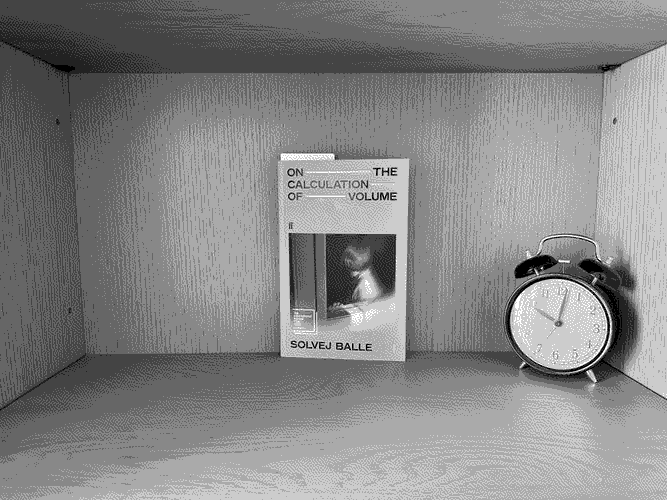
Timeline
- Oct 08, 2026: started reading.
- Oct 14, 2026: finished reading.
Review
Very weird time in my life to start reading this cycle of novels. Currently my days are completely unpredictable and centered around the needs and moods of a 2 month old baby. So naturally I find myself jealous of the protagonist’s endless amount of time to herself for reading, writing, and contemplation.
Putting that aside, I was hesitant to start this cycle of novels because the central conceit, which I had only looked at obliquely and through a shroud of ignorance, felt a bit too played out. Hollywood has told this story a dozen times already with a dozen clever little twists. Does Balle really have anything interesting to add?
Well the jury’s still out, since this is only the first of seven volumes. That being said, Balle’s done two things with the trope that elevate the stakes in an interesting way. Yes, the narrator is trapped in the same day as it repeats. However, her body is still progressing through linear time. If she injures herself, the wound persists for several repetitions before it heals. Scars remain on her skin. Similarly, she has effects on the material world. Her actions have consequences for future repetitions. If she eats a bar of chocolate in the pantry, it will not be there the next time around. This is unexpected and rather intriguing!
The effect of these characteristics obviously lead to very interesting mental states for the protagonist, Tara. She becomes acutely aware of her consumptive footprint on whatever corner of the world she inhabits. At one point she believes she is some sort of monster consuming the world, bit by bit. She wonders conspiratorially if there is a second stream of time, hidden beneath her endlessly recurrence November day, where days pass as usual. She thinks she can see it through chinks in the day’s unfolding. It’s all very compelling, though I’ll admit it felt under-explored in this book’s account of Tara’s first “year” of repeated days.
I was also a bit frustrated at how passive the narrator is, but I’ll allow that it does fit her character so it can’t be held against the book. This is a story of interior states and contemplation more than it is an account of any heroic attempts to break out of the cycle.
Tentatively, here at the beginning of the seven volumes, I’m tempted to say that this is an interesting exploration of the monotony of middle age, the isolation, the repetition, the little divergences that seem significant but ultimately amount to nothing.
That being said, it also induced strong recollections of my time during 2020’s COVID lockdown. The repetition. The psychological toll of confinement. The anxiety and endless yearning for the cycle to break and for life to continue as it had before. I was surprised to see that this first volume was originally published in February of 2020. One of those rare and fascinating instances of art anticipating life, I suppose.
I don’t think this book was amazing purely on its own merits. It represents a small trickle from the tap of a much more expansive project. And I find, somewhat to my surprise, that I’m eager to see what the next few volumes have in store.
Details
- Publisher: Faber & Faber
- Page Count: 179
- ISBN: 9780571383375
<< shelf.