Archipelago
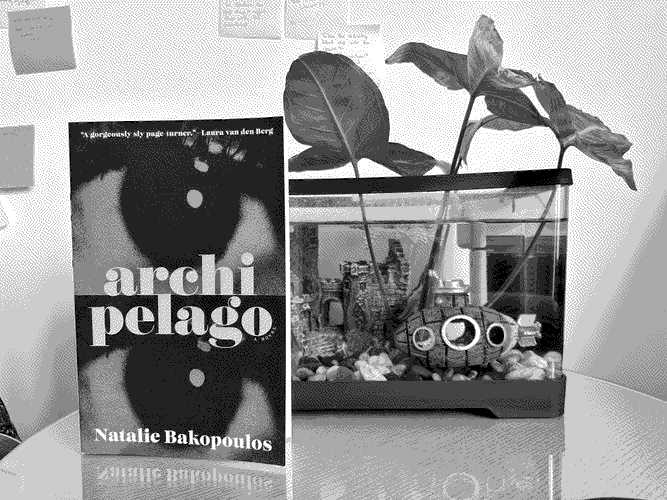
In 2026 I read Archipelago by Natalie Bakopoulos.
Timeline
- Jul 28, 2026: started reading.
- Aug 10, 2026: finished reading.
Review
I thought this book had potential when I picked it up last year. This summer I pulled it off my bookshelf because the whole world is afflicted with a Nolan-induced Odyssey fever, and I wanted to see if a book that is — as the copy on the back cover claims — “[s]pare and lyrical, with echoes and subversions of the Odyssey” could attack or deconstruct the current cultural attitude in ways that weren’t currently present in the mainstream discourse.
The first hundred pages of the book were perfectly fine. I wouldn’t call the prose lyrical, per se, but the narration was elliptical and somewhat rhythmic, and the setting of the Dalmatian coast was novel (to me) and lent an appealing ambience. There were plenty of elements and oblique references to the Odyssey to keep me interested.
Of course, the decision to anchor the story on an unnamed narrator immediately calls to mind Cusk’s Outline. Unfortunately for Bakopoulos, Cusk’s work sets a high bar, so any narrative that evokes it risks feeling like a crude imitation simply by inviting the comparison. Whereas Cusk’s narrator is elusive and withholding, attributes that pull the reader along, curious to know more, the unnamed narrator of Archipelago gives too much and takes for granted that the flame of the reader’s curiosity will be sustained despite doing nothing to stoke its embers. As a result, the central voice of Archipelago starts to come across as excessively self-centered and neurotic.
Somewhere around p130 of this 234 page novel, the story started to drag and I began to lose faith in Bakopoulos’s vision. On p151, as if anticipating my note, the narrator states the thesis outright. This, alas, threw a bucket of cold water on the dwindling fire of my interest:
Of course, this is not a story about logic. It’s a story about theme and variation and echo, told not to re-create what happened or even what could have happened but to create a happening on the page. About what it all felt like. Not the creation of story but it’s decreation.
I have a rule, maybe it’s a silly one, but any time the narration of the novel has to start pontificating about the nature of the story it is telling in such explicit terms this sends a clear signal that the story is not strong enough on its own merits. When a novel digresses into literary criticism of itself, it is because the writer is anticipating an imagined critical remark and trying to get ahead of it. Not, crucially, because it serves the story or the characters in it. In doing so, the writer singals that the premise and execution of the work are thin, or worse, that they themselves don’t fully understand them. A need to re-articulate them explicitly on the page can only be for the edification of the author. The writer in me recognizes the insecurity that lies at the root.
There are exceptions to every rule, sure. It is possible to do something like this in a self-referential, ironic way. I’ve read plenty of writers that incorporate “meta” commentary in ways that are original and effective (most notably in recent memory is Munir Hachemi). But a writer must be very talented and rather clever for a moment like this not to break the rhythm of the book like a fart in the quiet moment between movements in an orchestral performance.
Having finished the book, I can say pretty definitively that this moment of exposition on p151 is precisely where the book lost me.
Details
- Publisher: Tin House
- Page Count: 234
- ISBN: 9781963108309
<< shelf.