Satantango
In 2026 I read Satantango by László Krasznahorkai.
Timeline
- Jan 23, 2026: started reading.
- Feb 12, 2026: finished reading.
Review
One of the problems that plagues post-modernist literature, in my estimation, is that it can — at times — fetishize form to such an extent that it starts to detract from an otherwise compelling story. Don’t mistake me, I generally gravitate to and appreciate work that rejects traditional forms and tries earnestly to discover new modes of expression. This is not as a sweeping condemnation of the project. More so it is a recognition of where things can go pear-shaped, so to speak.
That caveat out of the way, this is a pretty stellar debut from the man who went on to win a Nobel Prize in Literature 40 years after its initial publication. The book artfully captures the paranoia and despair that leeches into rural life in a way I haven’t seen demonstrated before. It also does a clever job of showing just how this state of life could leave these communities vulnerable to and desperate for charismatic, totalitarian leaders. Something which speaks to the present moment more than I expected it to.
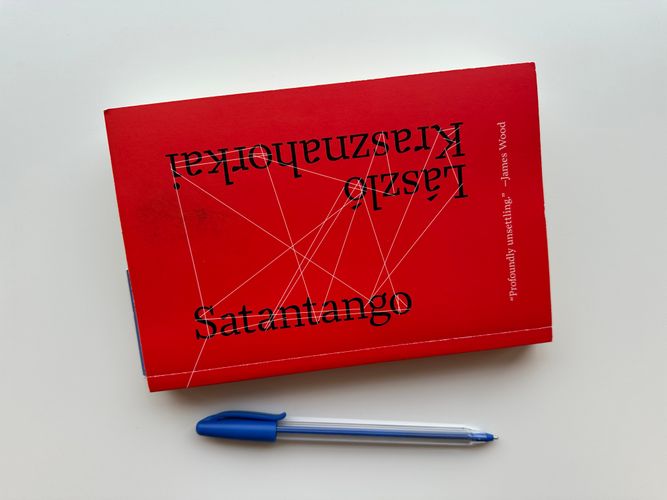
The blurb on the front states that the book is “profoundly unsettling” and I’m inclined to agree. It was also smartly arranged, devilishly ambiguous, and darkly comic. Overall, I enjoyed my time with it. The one caveat I reserve is that the final “resolution” felt more like a cute response to the impositions of the chosen form, rather than than an insightful barb. A self-satisfaction with the aesthetic principal first sketched out, rather than any final significance.
Thus we return, fatefully, to my opening salvo about the pitfalls of postmodernism in literature.
Details
- Publisher: New Directions Press
- Page Count: 282
- ISBN: 9780811220897
<< shelf.