1381: The Year of the Peasants’ Revolt
In 2026 I read 1381: The Year of the Peasants’ Revolt by Juliet Barker.
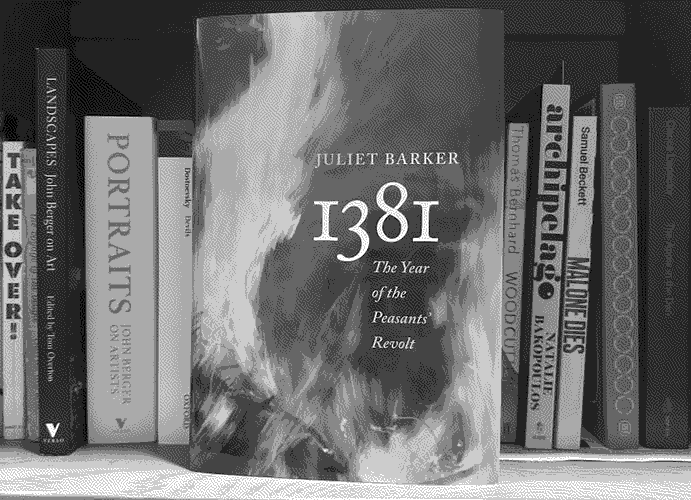
Timeline
- Mar 02, 2026: started reading.
- Mar 25, 2026: finished reading.
Review
First things first, the American publisher did Juliet Barker dirty by including the phrase “Peasants’ Revolt” in the subtitle of this edition. In her own introduction, page xiii of the preface, she writes “this was not a ‘peasants’ revolt’ at all.” The original title of the book as it was published in the UK is “England, Arise: The People, the King and the Great Revolt of 1381,” and this is both a much better title and a better reflection of the content of the historical argument she makes.
Okay, now to the heart of it, this book bummed me out. The saying is “don’t meet your heroes,” but Barker’s work makes me want to coin a new phrase along the lines of “don’t read rigorously researched histories of mythologized events.”
Most striking, for me, was that, while John Balle features so prominently in the popular mythology of these events, he very likely was a marginal figure who was executed to make an example. The lionized figure most are familiar with today is, ironically, the fault of the chroniclers of the day who found a convenient scapegoat and justification for the uprising in an excommunicated priest whose inflammatory rhetoric was well known at the time.
Another interesting point was that, in hindsight, the organization, resistance, and simmering discontent were all apparent in the years, decades even, prior to the events of the summer of 1381.
Unfortunately for non-academic readers, Barker’s unwillingness to make any assertion that can’t be backed up and corroborated by at least two trustworthy primary sources can lead to some fairly dry reading. The book has few heroes and an incredible amount of hedging. Hardly anything can be known for certain unfortunately. Because the myths of the rebel leaders are not verifiable or consistent, a great deal of the text is spent enumerating the known actions of the rebel groups and the property they destroyed or the records they burned. Thrilling stuff.
And while my sensibilities as a reader and appreciator of dramatic tension and poetic imagery will always be disappointed that her work rigorously disproves Balle’s sermon at Blackheath and Richard II’s condemnation of the rebels at Waltham, I do appreciate that this history lends credence to the fact that this was a well organized, diverse (geographically and socially) network of rebels that were able to bring the kingdom to its knees within a matter of days.
Even though the immediate aftermath of their efforts seemed to show that they had accomplished nothing, their legacy has rippled down through time to be so much bigger than any of those involved could have possibly imagined. There is some small comfort in that, even without the mythic heroes we’ve fashioned for ourselves from the wreckage.
Details
- Publisher: Belknap Press
- Page Count: 506
- ISBN: 9780674368149
<< shelf.