Portraits
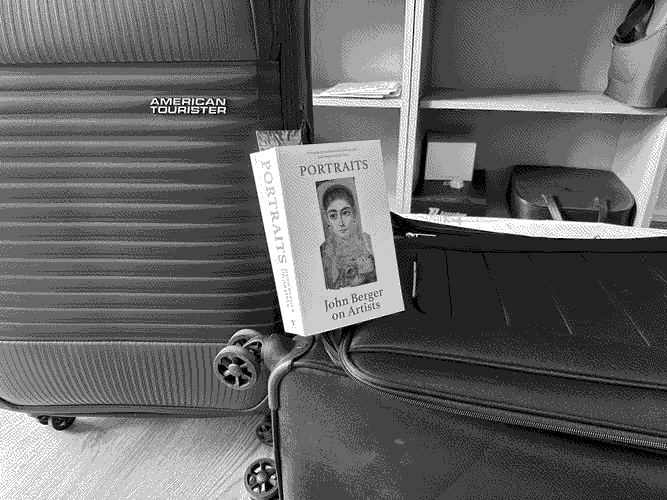
In 2026 I read Portraits by John Berger.
Timeline
- Jul 21, 2026: started reading.
- Nov 18, 2026: finished reading.
Review
Cracked into this in July assuming that I had plenty of time to read it before my youngest son was born and we moved from India back to the US. Little did he know, &c. &c.…
Berger is one of the most interesting writers on art and its relationship to society that I’ve come across. An original thinker and a playfully imaginative critic. It’s impossible to read this collection of essays on artists without having something jump out unexpectedly and hit you between the eyes.
I tore through the first half of this collection, but lost steam in the second half. Aside from his literary references sending me on various, personal detours, I can’t fault Berger for my flagging interest in the text. The fault lies, rather, in the editing and organization of these pieces. Overton has opted to arrange a life’s worth of writing based (loosely?) on the birth year of the artist. In the process, he has removed the titles of the original essays and — in some cases — slapped them together with other excerpts and articles from starkly different projects and points in Berger’s career. I think, perhaps, the book was intended and is better understood as a reference for Berger’s thinking on these artists, rather than a retrospective or systematic look at how he approached their work throughout his life.
Nevertheless there are myriad things worth reading and revisiting in this collection. Far too many to enumerate here. I’ll conclude with two bits that struck me most forcefully.
First, his discussion of Théodore Géricault’s portraits of inmates from the asylum of La Salpêtrière:
Anyone who has been beside a friend beginning to fall into madness will recognise this sense of being forced to become an audience. […] Then [the friend] approaches the phantom and confronts the terrible space existing between spoken words and what they are meant to mean. In fact this space, this vacuum, is the pain. And finally, because like nature it abhors a vacuum, madness rushes in and fills the space and there is no longer any distinction between stage and world, playing and suffering.
— p212
Second, he’s forever changed the way I’ll engage with the work of Rothko:
All previous painting — from the paleolithic caves to modern abstraction — was a reflection upon, or game with, the visible as found in the existent visible world. […] Rothko’s paintings do, or propose, the opposite. They are about colours or light awaiting the creation of the visible world.
— p330
Absolutely incredible stuff regardless of any quibbles about editing.
Details
- Publisher: Verso
- Page Count: 512
- ISBN: 9781839764158
<< shelf.