Ruins, Child
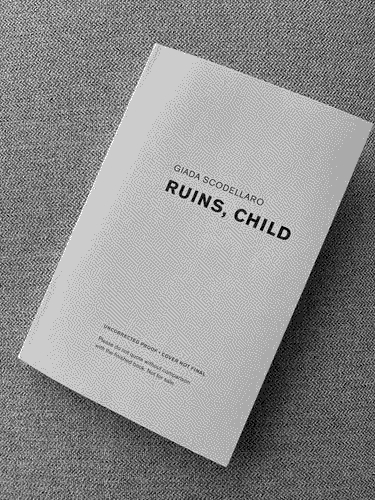
In 2025 I read Ruins, Child by Giada Scodellaro.
Timeline
- Dec 18, 2025: started reading.
- Dec 30, 2025: finished reading.
Review
New Directions was kind enough to send me a an advanced review copy of this last year.
I read it with great interest and pitched a review to a few magazines but couldn’t find any takers. In hindsight, I might have taken slightly too academic a tack.
Here’s a version of the pitch I sent around. I think it gives decent enough insight into what I took away from the novel:
This novel is unconventional in both form and function. I’m interested in unpacking how it explores and moves through its different layers of time, tradition, and tragedy. The novel is boundary pushing both in narrative voice and structure in a way that evokes the sparseness and ambiguity of Samuel Beckett’s late style (specifically works like Company or Ill Seen, Ill Said).
More specifically, I am interested in unpacking how this work simultaneously emphasizes and obfuscates the layers of tradition and communal history that develop over time in dispossessed communities. The setting is ambiguous. The time is ambiguous. The narrative perspective is layered and shifting. The community participates in tradition and collective remembering, but the question of why things exist as they are now is often left only half answered.
Details
- Publisher: New Directions Press
- Page Count: 153
- ISBN: 9780811240239
<< shelf.