Brother Brontë
In 2026 I read Brother Brontë by Fernando A. Flores.
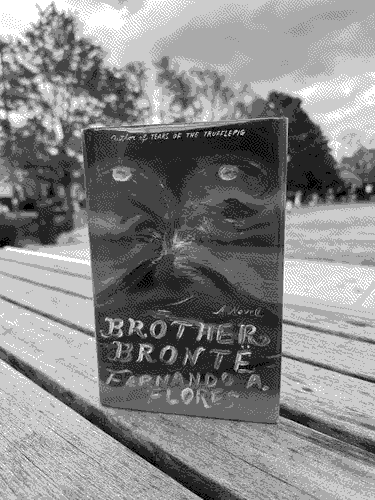
Timeline
- Nov 07, 2026: started reading.
- Nov 17, 2026: finished reading.
Review
This book was quite frustrating. In the abstract, it has all the right ingredients. It’s set somewhere other than New York City. It’s story is rooted in reality, but not too tightly tethered to it. There is a thread of political thought and criticism woven into the premise. These are all typically very good indications of an interesting novel.
Unfortunately, all of this potential was squandered at the level of the prose. There is a tendency, I have begun to notice, in a certain strain of contemporary fiction — let’s call it “upmarket” — for writers to anticipate the impact of a story beat or an image or simile and feel quite assured that it is good, maybe even great. Counterintuitively, this confidence seems to undercut their ability to deliver on the potential of these moments. Rather like a sprinter who trips at the finish line because they started celebrating before they crossed it.
Throughout the prose of this novel, there are flashes of images or allusions that could be quite good. However, the author has not put in the requisite work to harness and tame them onto the page. They remain raw, unfinished, and rather crude in their execution. I’ll illustrate with a few brief excerpts:
Neftalí set the cinder block aside, uncovered the well, and gazed deeply into its underground cataract oblivion, possibly to catch her reflection on the surface of the water, like she had when she was a girl. [emphasis mine.]
— p6
I strongly believe that if a phrase as clunky as “its underground cataract oblivion” was not flagged in your editor’s notes, then it’s possible your editor was not reading the text closely enough.
[…] like a cathedral of falling glass shards.
— p63
This simile in particular is most characteristic of the tendency I’m taking issue with. There is the flash of an interesting image, but it is dropped on you in such an abrupt and extraneous way that you have no idea what it’s meant to actually convey? Did the falling glass shards temporarily resemble a cathedral as they fell through the air? What would that actually mean? Was it just a large amount of glass? Did it evoke the feeling of being inside a cathedral and looking at stained glass? Did the observer think they saw a biblical image in the falling glass shards? Why would the character’s perspective in this “close third” narration style make this connection? Were they raised catholic? No explanation is given and the text quickly moves on.
[…] taking a leap from the precipice of her impecunious state […]
— p119
I’m equally as confident that this clause felt good to write as I am that it was ultimately a disservice to the work that it was included in the final text.
All of this is deeply unsatisfying as a reader. Perhaps even more frustrating because of how clearly the potential of the work is telegraphed by these images that constantly splutter at you so artlessly as you read.
Similar criticisms could be made of the plotting, structure, and character development. But it would not be worthwhile to belabor the point. I wanted to love it, but found myself hoping it would end sooner, far sooner, than it did. Perhaps my criticism is harsher as a result of my disappointment that it did not live up to its potential.
Details
- Publisher: MCD / Farrar Straus and Giroux
- Page Count: 337
- ISBN: 9780374604165
<< shelf.